Crypto Sweepstakes
 Available in US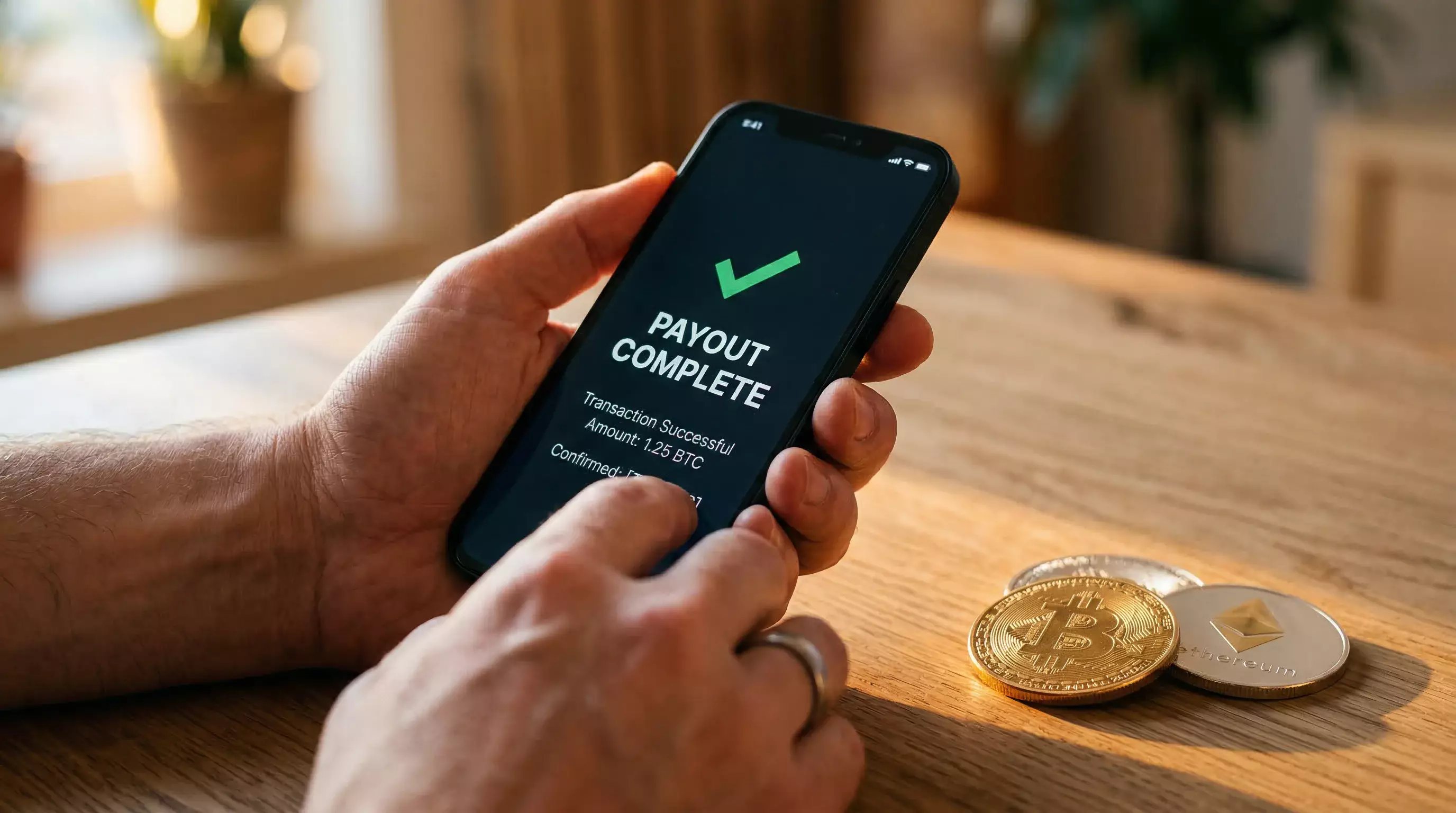
Cryptocurrency remains the fastest way to get your crypto sweepstakes casino payout into your own hands. While traditional banking methods leave you waiting days for processing, Bitcoin and other digital currencies can move from casino approval to your wallet in under fifteen minutes. That speed advantage has made crypto the preferred redemption method for serious sweeps players who value their time as much as their winnings.
The catch? Not every sweepstakes platform embraces cryptocurrency equally. Stake.us leads the pack with comprehensive multi-coin support, but many competitors limit crypto options or exclude them entirely. This fragmented landscape means players need to understand which platforms actually deliver on the promise of instant crypto payouts—and which ones only pretend to.
This guide breaks down everything you need to know about cryptocurrency withdrawals at sweepstakes casinos. We cover the coin-by-coin speed differences that matter, walk through wallet setup for newcomers, identify which platforms genuinely support crypto redemptions, and explain the security practices that keep your winnings safe. Whether you are converting Sweeps Coins to Bitcoin for the first time or optimizing your existing crypto cashout strategy, the following sections provide actionable steps rather than marketing fluff.
The data here comes from actual platform testing and industry research, including documented findings that crypto payouts process in under fifteen minutes from approval to wallet arrival. Understanding these mechanics puts you in control of your redemption timeline instead of leaving it to chance.
Crypto Sweepstakes — More on this topic at instant payout sweepstakes casino.
Why Cryptocurrency Beats Every Other Payout Method
Bank transfers wait in queues. PayPal holds funds for review. Gift cards need processing during business hours. Cryptocurrency bypasses all of these bottlenecks by operating on decentralized networks that never close, never take holidays, and never require approval from a third-party institution.
When you request a crypto payout from a sweepstakes casino, the transaction follows a straightforward path. The casino verifies your account, approves the redemption, and broadcasts the transaction to the blockchain. According to testing data from DeFi Rate, Bitcoin payouts arrive in under fifteen minutes from the moment of approval. Compare that to ACH bank transfers, which routinely take forty-eight to seventy-two hours even under ideal conditions.
No Banking Intermediaries
Traditional payment methods require multiple parties to approve and process your funds. Your bank, the payment processor, and often additional fraud prevention services all get a say in when your money moves. Each handoff introduces potential delays, especially if any party flags the transaction for manual review.
Cryptocurrency eliminates the middlemen. Once the sweepstakes casino approves your redemption, the blockchain handles everything else. No bank needs to verify the transfer. No payment processor holds funds pending investigation. The transaction either confirms or it does not—typically within minutes.
Twenty-Four Hour Processing
Request a bank transfer on Friday evening and you might wait until Tuesday for the funds to appear. Weekends and banking holidays create predictable gaps in traditional payment processing that crypto simply ignores. Bitcoin network confirmations—the process that validates transactions on the blockchain—require approximately thirty to sixty minutes regardless of when you initiate the transfer.
This round-the-clock availability matters more than most players realize. Sweepstakes winnings do not wait for convenient timing, and neither should your access to those funds.
Lower Fees for Larger Amounts
Bank wires often carry flat fees that eat into smaller redemptions. Credit card processing charges percentage-based fees that scale with transaction size. Cryptocurrency fees depend primarily on network congestion rather than the amount being transferred.
Moving ten thousand dollars worth of Bitcoin costs roughly the same in network fees as moving one hundred dollars. For players redeeming significant Sweeps Coin balances, this fee structure frequently makes crypto the most economical option despite any exchange rate considerations.
Privacy Advantages
Some players prefer keeping their sweepstakes activity separate from their primary banking records. Cryptocurrency offers this separation naturally. While KYC verification still links your identity to the casino account, the actual fund movement does not appear on bank statements or create paper trails through traditional financial institutions.
This privacy comes with responsibility. You manage your own wallet security, and lost private keys mean lost funds with no customer service number to call. The tradeoff appeals to players who value autonomy over the convenience of institutional backup.
Coin-by-Coin Speed Comparison
Not all cryptocurrencies move at the same pace. The blockchain architecture underlying each coin determines confirmation times, network fees, and practical utility for sweepstakes redemptions. Understanding these differences helps you choose the right coin for your situation rather than defaulting to whatever the platform suggests.
Bitcoin: The Universal Standard
Bitcoin remains the most widely accepted cryptocurrency at sweepstakes casinos, and for good reason. Every major platform supporting crypto payouts includes BTC as an option. The network processes transactions in roughly fifteen to forty minutes under normal conditions, with most sweepstakes players reporting funds in their wallets within twenty minutes of casino approval.
Bitcoin network confirmation typically requires three to six blocks, translating to thirty to sixty minutes for full settlement according to industry testing. However, many players see spendable balances sooner as wallets often credit incoming transactions before full confirmation completes.
The downside? Network fees fluctuate with demand. During high-traffic periods, Bitcoin transaction costs can spike significantly. If you are redeeming smaller amounts, these fees may represent an uncomfortable percentage of your total withdrawal.
Ethereum: Faster but More Variable
Ethereum typically processes faster than Bitcoin, with transactions confirming in five to fifteen minutes under normal network conditions. This speed advantage makes ETH attractive for players prioritizing quick access over universal acceptance.
The Ethereum network introduced variable gas fees that change based on computational demand. During network congestion—often triggered by NFT launches or DeFi activity—these fees can exceed Bitcoin costs substantially. Timing your withdrawal during lower-demand periods helps minimize this issue.
Platform support for Ethereum payouts trails Bitcoin slightly, but most crypto-friendly sweepstakes casinos now include ETH as a standard option.
Litecoin: The Speed Specialist
Litecoin was designed specifically for faster transactions, and it delivers on that promise. Most LTC transfers complete in two to ten minutes with consistently lower fees than either Bitcoin or Ethereum. The network confirms blocks approximately every 2.5 minutes compared to Bitcoin’s ten-minute average.
For pure speed at minimal cost, Litecoin often represents the optimal choice. The tradeoff comes in reduced liquidity compared to BTC and ETH—converting Litecoin to fiat currency may involve an extra step if your preferred exchange does not support direct LTC trading pairs.
XRP: Sub-Minute Settlements
XRP processes transactions in under one minute with fees measured in fractions of a cent. For raw speed, nothing commonly available at sweepstakes casinos matches it.
The limitation here is platform support. Regulatory uncertainty surrounding XRP in the United States has made many sweepstakes operators hesitant to offer it as a payout option. If your preferred casino supports XRP redemptions, it represents an excellent choice. If not, you will need to choose from other available coins.
Stablecoins: Speed Without Volatility
USDT and USDC solve a problem that other cryptocurrencies cannot: price stability. These stablecoins maintain approximate one-to-one parity with the US dollar, eliminating the risk that your withdrawal loses value between the time you request it and the time you convert to fiat.
Transaction speeds depend on the underlying network. USDT and USDC both operate on multiple blockchains including Ethereum, Tron, and Solana. Choosing the TRC-20 version of USDT, for example, typically confirms faster and cheaper than the ERC-20 version running on Ethereum.
Stablecoin availability at sweepstakes casinos varies widely. Platforms that offer them provide a compelling option for players who want crypto speed without crypto volatility.
Comparison Overview
| Coin | Typical Speed | Fee Level | Platform Support |
|---|---|---|---|
| Bitcoin (BTC) | 15-40 minutes | Variable, moderate to high | Highest |
| Ethereum (ETH) | 5-15 minutes | Variable, can spike | High |
| Litecoin (LTC) | 2-10 minutes | Consistently low | Moderate |
| XRP | Under 1 minute | Minimal | Limited |
| USDT/USDC | Varies by network | Varies by network | Growing |
The right choice depends on your priorities. Need absolute speed? XRP or Litecoin. Want maximum platform compatibility? Bitcoin. Worried about price swings? Stablecoins solve that problem directly.
Which Sweepstakes Casinos Accept Crypto Payouts
The sweepstakes casino landscape expanded rapidly between 2024 and 2025, with approximately forty new platforms launching during that period according to UMG Gaming analysis. This growth brought increased variety in payment options, though crypto support remains unevenly distributed across the industry.
Stake.us: The Crypto-Native Leader
Stake.us operates as the clear frontrunner for cryptocurrency redemptions. The platform supports over twenty different coins including Bitcoin, Ethereum, Litecoin, Dogecoin, and various stablecoins. This breadth of options means players can choose whichever cryptocurrency best fits their existing holdings or preferences.
Beyond variety, Stake.us processes crypto payouts with minimal friction. The platform was built with cryptocurrency at its core rather than adding it as an afterthought, and that design philosophy shows in the redemption experience. Players routinely report completion times matching the fastest theoretical speeds for their chosen coin.
The tradeoff for this crypto-forward approach involves fewer traditional payment alternatives. If you prefer bank transfers or PayPal, Stake.us may not fit your needs as cleanly as platforms with broader payment method support.
SpeedSweeps and Similar Platforms
Several mid-tier sweepstakes casinos offer crypto payouts with more limited coin selection. Typical offerings include Bitcoin, Ethereum, and Litecoin—the most established options—without extending into altcoins or stablecoins.
These platforms generally deliver reliable crypto redemptions within the expected timeframes. The reduced coin variety rarely matters for most players, as BTC and ETH cover the majority of use cases. What does matter is whether the platform processes crypto payouts consistently or treats them as a secondary option with longer approval queues.
Platforms with Crypto Purchase Only
Some sweepstakes casinos accept cryptocurrency for Gold Coin purchases while not supporting crypto payouts at all. This one-way crypto integration creates confusion for players who assume that buying with Bitcoin means they can withdraw in Bitcoin.
Always verify redemption options before committing to a platform. The ability to purchase with crypto does not guarantee the ability to redeem with crypto. Reading the terms of service or testing with a small redemption reveals the actual payout landscape more reliably than marketing materials.
Why Many Platforms Skip Crypto
Operating crypto payments requires technical infrastructure, compliance considerations, and ongoing wallet management that smaller platforms may not want to maintain. The sweepstakes industry operates in a regulatory gray area, and adding cryptocurrency introduces additional complexity that some operators prefer to avoid.
From a business perspective, traditional payment methods like bank transfers and gift cards serve the majority of players adequately. Crypto support appeals to a specific segment of the user base—important but not universal. Platforms calculating their development priorities may conclude that other features deliver more value than cryptocurrency integration.
This calculus may shift as crypto adoption grows in the broader population. For now, players who prioritize crypto payouts need to choose platforms deliberately rather than assuming universal support.
Setting Up Your Crypto Wallet for Sweeps Redemptions
Before you can receive cryptocurrency payouts, you need a wallet address to receive them. This wallet exists independently of any sweepstakes platform—you control it, you manage its security, and the funds belong to you the moment they arrive.
Wallet Types for Sweepstakes Players
Software wallets offer the most practical balance of accessibility and security for sweepstakes redemptions. Applications like MetaMask, Trust Wallet, and Exodus run on your phone or computer, providing easy access to your funds without requiring specialized hardware.
MetaMask works primarily with Ethereum and ERC-20 tokens, making it ideal if you plan to withdraw in ETH or stablecoins. Trust Wallet supports a broader range of coins including Bitcoin and offers a mobile-first experience. Exodus provides a desktop application with built-in exchange features for converting between cryptocurrencies.
Hardware wallets like Ledger and Trezor offer enhanced security by keeping your private keys offline. These devices make sense for players accumulating significant cryptocurrency holdings, though they add friction to the withdrawal process compared to software alternatives.
Creating Your First Wallet
The setup process follows similar patterns across most wallet applications. Download the wallet from official sources only—phishing sites that mimic legitimate wallets represent a real threat. Verify the URL, check reviews, and when possible, use direct links from the wallet provider’s social media or official communications.
During setup, the wallet generates a seed phrase—typically twelve or twenty-four words in a specific order. This phrase represents the master key to your funds. Anyone with access to these words can control your wallet and everything in it. Write them down on paper and store that paper somewhere secure. Do not screenshot them. Do not save them in a notes app. Do not email them to yourself.
After securing your seed phrase, the wallet generates addresses for receiving different cryptocurrencies. These addresses are long strings of letters and numbers that you provide to sweepstakes casinos when requesting payouts.
Address Verification Matters
Cryptocurrency transactions cannot be reversed. Sending funds to the wrong address means losing them permanently, with no customer support capable of recovering them. This permanence makes address verification critical.
When entering your wallet address on a sweepstakes platform, copy and paste rather than typing manually. After pasting, verify the first four and last four characters match your actual address. Malware exists that swaps copied wallet addresses for attacker-controlled alternatives, making this verification step non-negotiable.
Some wallets include QR codes for their addresses. If your sweepstakes platform supports QR scanning, this method reduces error risk further by eliminating manual text entry entirely.
Backup and Recovery Planning
Your seed phrase backup should survive scenarios that destroy your primary device. A phone dropped in water, a laptop stolen, a hard drive failure—none of these should cost you access to your cryptocurrency.
Consider storing your seed phrase in multiple physical locations. A fireproof safe at home and a safety deposit box at your bank provides redundancy against localized disasters. Some players use metal seed phrase backup devices that resist fire and water damage better than paper.
Test your recovery process before accumulating significant funds. Create a wallet, send a small amount to it, then delete the wallet and restore it from your seed phrase. Confirming that your backup actually works costs nothing and prevents devastating surprises later.
Crypto Security: Protecting Your Sweepstakes Winnings
The same features that make cryptocurrency fast and private also make it unforgiving of mistakes. No bank will reverse a fraudulent transaction. No customer service representative can recover funds sent to the wrong address. Security responsibility falls entirely on you.
Double-Check Wallet Addresses
Every crypto transaction should begin with address verification. Before confirming any withdrawal request, compare the destination address character by character against your wallet. Scammers exploit the complexity of cryptocurrency addresses—strings of seemingly random letters and numbers that most people cannot memorize or verify at a glance.
Clipboard hijacking malware specifically targets cryptocurrency users by monitoring your clipboard and replacing copied wallet addresses with attacker-controlled alternatives. The substituted address often shares the same first and last few characters as the original, making casual verification ineffective. Always verify the complete address, not just the beginning and end.
Network Selection Errors
Many cryptocurrencies operate on multiple networks. USDT exists on Ethereum as an ERC-20 token, on Tron as a TRC-20 token, and on several other blockchains. Sending tokens to an address on the wrong network typically results in permanent loss.
When requesting a crypto payout, confirm that the network selected on the sweepstakes platform matches the network your wallet expects to receive on. If you provide an Ethereum address but the casino sends via the Tron network, those funds may become irretrievable.
Some advanced wallets support multiple networks and can receive tokens regardless of which chain they arrive on. Most do not. When in doubt, verify network compatibility before initiating any withdrawal.
Private Key Storage
Your private keys—or the seed phrase that generates them—represent absolute control over your cryptocurrency. Anyone who obtains these keys can transfer your funds instantly and irreversibly. No password reset exists. No account recovery process applies.
Never store seed phrases or private keys in digital format on internet-connected devices. Screenshots, text files, email drafts, and cloud storage all create attack vectors that motivated hackers actively exploit. Physical paper stored securely remains the gold standard for seed phrase backup.
If you must store keys digitally, use an encrypted password manager on a device that stays offline. Even then, consider this approach inferior to properly secured physical backup.
Common Scams Targeting Sweeps Players
Fake customer support represents the most common scam vector. Scammers monitor social media for complaints about sweepstakes casinos and respond posing as official support staff. They request wallet credentials or seed phrases under the guise of troubleshooting payout issues. Legitimate support will never ask for this information.
Phishing sites mimic popular sweepstakes platforms and crypto wallets. These sites capture login credentials and wallet information when users attempt to access their accounts. Always verify URLs before entering any sensitive information, and bookmark legitimate sites rather than following links from search results or messages.
Investment schemes promising guaranteed returns on cryptocurrency holdings target sweeps players who have accumulated meaningful balances. No legitimate investment guarantees returns. Anyone promising otherwise is attempting to steal your funds.
Understanding Fees and Volatility Risks
Security threats aside, cryptocurrency payouts involve costs that affect your bottom line. Network fees, exchange rate fluctuations, and potential tax implications all determine the actual value you receive from your Sweeps Coin redemptions.
Network Fees by Coin
Every blockchain transaction requires a fee paid to the network validators who confirm it. These fees vary dramatically by coin and current network conditions.
Bitcoin fees during normal periods typically range from two to ten dollars per transaction. During high-demand periods, fees can spike to fifty dollars or more. Ethereum gas fees follow similar patterns but can swing even more dramatically during network congestion events.
Litecoin and other faster networks generally charge fees under one dollar regardless of conditions. If network costs concern you, these alternatives offer predictable pricing.
Timing Withdrawals for Better Rates
Network fees fluctuate throughout the day and week. Bitcoin and Ethereum typically see lower fees during off-peak hours in North American time zones and on weekends when trading volume decreases.
Fee tracking websites display current network conditions and historical patterns. Monitoring these before initiating large withdrawals can save meaningful amounts over time. The difference between peak and off-peak fees sometimes exceeds twenty dollars per transaction.
The Stablecoin Alternative
If you plan to convert cryptocurrency to US dollars immediately, stablecoins eliminate exchange rate risk entirely. USDT and USDC maintain near-perfect parity with the dollar, meaning the value you withdraw matches the value you receive regardless of market movements.
The tradeoff involves reduced upside. If Bitcoin appreciates between your withdrawal and your conversion to fiat, you miss that gain. Players who view sweepstakes winnings as money to spend rather than investments may prefer the certainty stablecoins provide.
Tax Implications
Cryptocurrency transactions create taxable events in the United States. When you convert Sweeps Coins to cryptocurrency and later sell that cryptocurrency for fiat currency, you may owe capital gains tax on any appreciation.
The sweepstakes industry leader VGW, which operates Chumba Casino, has been transparent about the sector’s position. As founder Laurence Escalante stated: “As a pioneer and market leader, we recognize the rising interest in our sector and our responsibility to both ensure the facts about our games, operations and standards are understood, and advocate for what we believe the appropriate industry frameworks should look like.” This acknowledgment of regulatory attention signals that compliance, including tax compliance, matters increasingly in this space.
According to the KPMG Sweepstakes Gaming Primer, platforms may issue tax forms for redemptions exceeding certain thresholds. The IRS treats cryptocurrency as property, meaning every sale or exchange potentially triggers reporting requirements. Consulting a tax professional familiar with cryptocurrency helps ensure compliance without overpaying.
Crypto Payout Problems: Diagnosis and Solutions
Even well-executed crypto withdrawals occasionally encounter issues. Understanding common problems and their solutions prevents unnecessary panic when transactions do not proceed as expected.
Transaction Pending
A pending transaction usually means the blockchain has not yet confirmed it. During periods of network congestion, transactions with lower fees may wait hours or even days for confirmation. This delay reflects network conditions rather than platform problems.
Check a blockchain explorer using your transaction ID to see current status. If the transaction appears with zero confirmations, it is waiting in the network queue. If it shows multiple confirmations but has not appeared in your wallet, the issue lies with your wallet software rather than the blockchain.
Most pending transactions eventually confirm. If a transaction remains stuck for an extended period, some wallets offer options to increase the fee and prioritize confirmation. Alternatively, waiting for network congestion to clear often resolves the issue without intervention.
Wrong Network Selected
Sending cryptocurrency to an address on the wrong network represents one of the most common and potentially irreversible errors. If you provided an Ethereum address but the platform sent via Binance Smart Chain, the funds may be recoverable—but only with technical knowledge and access to your wallet’s private keys on the correct network.
Prevention beats recovery. Always confirm network selection matches between the sending platform and receiving wallet before initiating any withdrawal. When multiple networks are available for the same token, take extra time to verify compatibility.
If you have already made this error, do not assume the funds are lost. Research recovery procedures for your specific wallet and network combination. Many modern wallets support adding custom networks that can reveal previously hidden balances.
Address Errors
Cryptocurrency sent to an incorrect but valid address cannot be recovered. The funds now belong to whoever controls that address—if anyone does. Many incorrect addresses belong to no one, meaning the cryptocurrency is effectively destroyed.
If you suspect an address error but have not yet confirmed the transaction, cancel immediately if possible. Once confirmed on the blockchain, no reversal mechanism exists.
Double and triple-check addresses before every transaction. The few seconds this takes prevents losses that no support team can reverse.
Support Contact Strategy
When crypto payout issues require platform assistance, approach support with specific information. Provide your transaction ID, the wallet address you submitted, the coin and network you selected, and screenshots of any error messages.
Avoid sharing sensitive information that support should never need: your seed phrase, private keys, or passwords. Legitimate support staff diagnose issues using transaction IDs and account information, not wallet credentials.
If the platform’s standard support proves unhelpful, escalate through available channels. Social media often produces faster responses than email for unresolved issues. Document everything in case you need to pursue further action.
See also Sweepstakes Casino.