Restrictions
 Available in US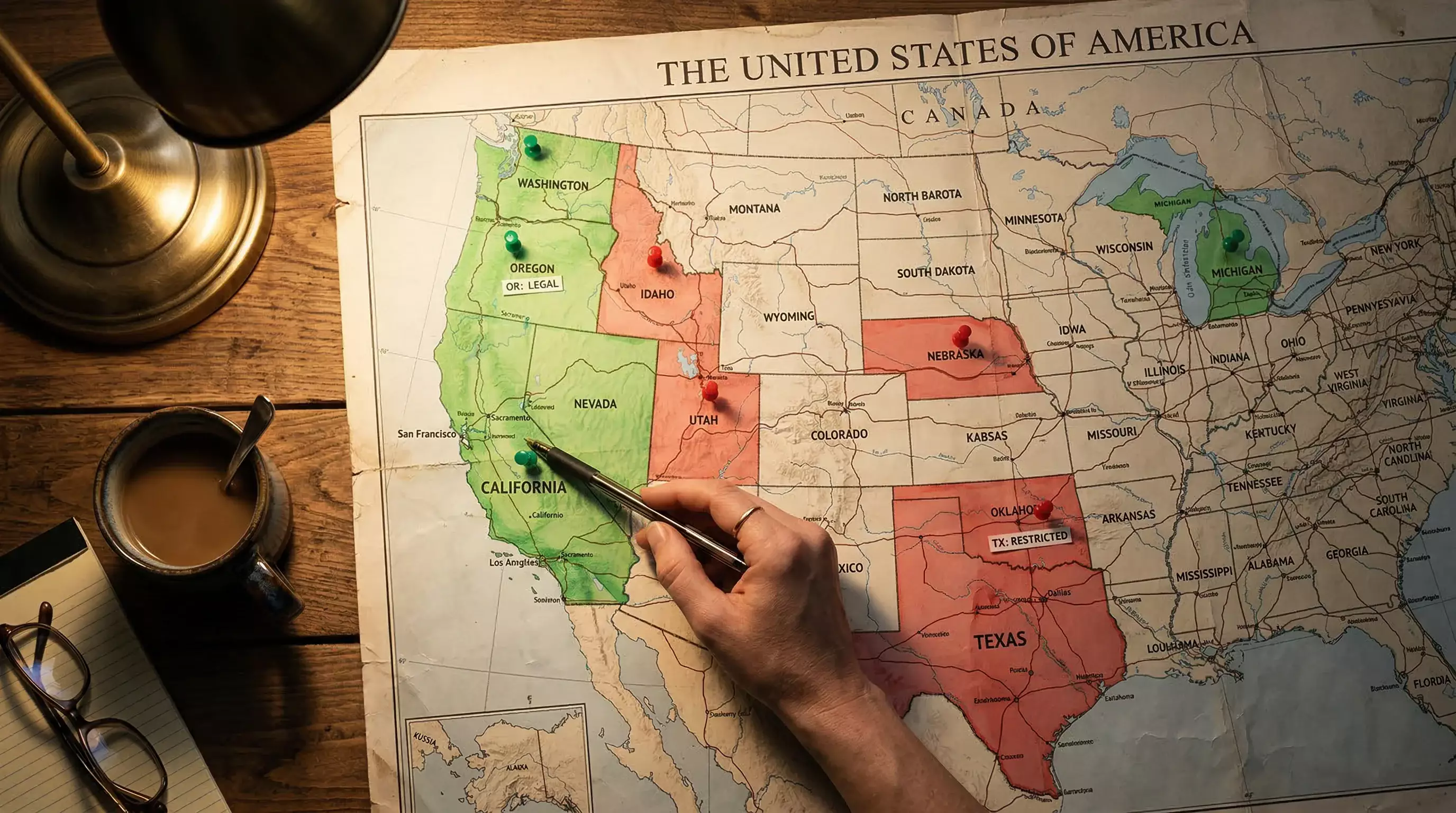
Sweepstakes casino state restrictions have reshaped the industry faster than anyone predicted. What began as a legal gray area accessible from virtually anywhere in the United States has become a patchwork of explicit bans, regulatory crackdowns, and uncertain futures. As of 2026, approximately forty states still permit sweepstakes casino operation, but that number continues shrinking as legislators respond to pressure from tribal gaming interests, traditional casino operators, and consumer protection advocates.
The most significant changes came from California and New York—two states representing billions in annual sweepstakes revenue. Their decisions to ban rather than regulate sent shockwaves through an industry that had grown accustomed to operating without meaningful oversight. Players in these states now face criminal penalties for participation, while platforms scramble to geofence their services and communicate with affected users.
This guide tracks the current legal landscape across all fifty states, explains the implications of major legislation like California’s AB 831, and helps players understand their options when regulations change. Know the law before you play. The consequences of ignoring state restrictions extend beyond account closure to potential legal liability.
Whether you are checking if your state still permits sweepstakes casino access or preparing for potential future restrictions, the information here reflects the latest legislative actions and enforcement patterns as of early 2026. We update this guide regularly as new legislation passes and enforcement actions unfold, but players should verify current status with their chosen platforms before playing.
Restrictions — More on this topic at instant payout sweepstakes casino.
The 2026 Legal Landscape: A Market in Flux
The sweepstakes casino industry occupies an unusual regulatory position. Unlike traditional online gambling, which requires explicit state authorization and licensing, sweepstakes casinos have operated under a promotional sweepstakes model that technically falls outside gambling regulations. This distinction allowed platforms to accept players from most states without obtaining gaming licenses.
That era of minimal oversight is ending. According to iGaming Business reporting, states with explicit sweepstakes casino bans now include California, New York, Montana, Connecticut, New Jersey, Nevada, Washington, and Idaho. This list expanded significantly during 2025, with California and New York representing the most economically impactful additions.
States with Explicit Bans
Eight states have enacted legislation or issued attorney general opinions explicitly prohibiting sweepstakes casino operation. Nevada and New Jersey banned sweepstakes casinos primarily to protect their established regulated gaming industries. Washington State’s gambling laws have long been interpreted to include sweepstakes models. Montana, Connecticut, and Idaho acted through various regulatory mechanisms.
California and New York joined this list through legislative action in 2025, fundamentally altering the industry’s economics and regulatory trajectory.
States with Active Enforcement
Beyond explicit bans, several states have pursued aggressive enforcement without clear statutory prohibition. Over one hundred cease-and-desist letters were sent to sweepstakes operators during 2025 from attorneys general in Arizona, Michigan, Maryland, Louisiana, and West Virginia. These actions forced platforms to withdraw from markets where their legal status remains contested.
Players in these states face uncertain access. Some platforms continue operating while challenging enforcement actions. Others have preemptively withdrawn to avoid legal exposure. The practical result: unreliable availability and potential mid-play service terminations.
The Sweepstakes Advantage—For Now
Despite these restrictions, sweepstakes casinos remain available in far more states than regulated online gambling. The KPMG Sweepstakes Gaming Primer notes that sweepstakes platforms operate in thirty-five or more states, compared to just seven states with legalized iGaming. For players in the forty-three states without regulated online casinos, sweepstakes platforms represent the only legal-adjacent option for casino-style gaming from home.
This availability gap explains why sweepstakes casinos have grown despite increasing regulatory pressure. Until more states legalize traditional online gambling, demand for sweepstakes alternatives will persist.
California AB 831: The 2.4 Billion Dollar Ban
California’s sweepstakes casino ban represents the most significant regulatory action in the industry’s history. Assembly Bill 831, signed into law in 2025, prohibits the operation of online sweepstakes casinos within the state and criminalizes participation by California residents. The economic impact dwarfs any previous state action.
California accounted for approximately 17 percent of the entire US sweepstakes casino market, generating an estimated 2.42 billion dollars in annual sales according to Eilers and Krejcik Gaming analysis. No other state approaches this market share. The ban effectively eliminated nearly one-fifth of industry revenue overnight.
What AB 831 Prohibits
The legislation targets both operators and players. Platforms cannot offer sweepstakes casino games to California residents, and geolocation technology must block access attempts. Players who circumvent these blocks through VPNs or other methods face potential criminal liability.
Penalties under AB 831 range from one thousand to twenty-five thousand dollars in fines, with potential jail sentences up to one year for repeat violations. While enforcement against individual players remains unlikely given resource constraints, the legal risk exists and should inform decision-making.
The Tribal Gaming Factor
California’s ban did not emerge from abstract regulatory concerns. Tribal gaming interests, which operate the state’s land-based casinos under federal compacts, lobbied aggressively for prohibition. As reported by Tribal Business News, California’s tribal gaming industry generates nearly 25 billion dollars for tribal communities and supports over 112,000 jobs statewide.
James Siva, Chairman of the California Nations Indian Gaming Association, framed sweepstakes casinos as existential threats: “These illegal platforms erase the benefits of regulated gaming while exposing consumers to serious risks. AB 831 protects the economic engine that generates nearly $25 billion for California communities and supports more than 112,000 jobs statewide.”
The tribal perspective emphasizes both economic protection and consumer safety. Sweepstakes platforms operate without the responsible gaming requirements, auditing standards, and consumer protections mandated for tribal casinos.
The Industry Response
Sweepstakes operators and their advocates offered a different interpretation. Jeff Duncan, Executive Director of the Social Gaming Leadership Alliance, characterized the ban as economic destruction: “California is on the verge of throwing away a billion-dollar industry. Sweepstakes casinos generate around $1 billion annually in California’s economy, including more than $700 million spent on advertising through California-based companies.”
Industry analysts estimated that California could have generated 175 million dollars in annual tax revenue by regulating rather than banning sweepstakes casinos—assuming a licensing structure similar to iGaming states. Instead, the state chose prohibition, foregoing this potential revenue while still facing enforcement costs.
Impact on Players
California residents with active sweepstakes casino accounts faced immediate consequences. Platforms provided limited windows to redeem existing Sweeps Coin balances before blocking access. Players who missed these deadlines encountered significant difficulties recovering funds, with some reporting months-long resolution processes.
The lesson for players in other states: monitor legislative developments and maintain minimal unredeemed balances. When bans pass, redemption windows may be shorter than expected.
New York’s Sweepstakes Casino Shutdown
New York followed California’s lead with Senate Bill 5935, effectively banning sweepstakes casino operations within the state. While the legislative mechanism differed from California’s approach, the practical impact proved similarly devastating for platforms and players.
The New York sweepstakes market generated approximately 762 million dollars in annual sales according to Eilers and Krejcik Gaming data reported through industry sources. Though smaller than California, New York represented a concentrated, high-value player base that operators could not easily replace.
Legislative Approach
New York’s ban leveraged existing gambling definitions rather than creating new sweepstakes-specific prohibitions. By clarifying that sweepstakes casino models constitute illegal gambling under state law, legislators avoided lengthy debates about novel regulatory frameworks. The interpretation triggered immediate enforcement authority without requiring new agency infrastructure.
This approach proved faster but less nuanced than California’s dedicated legislation. Operators had less warning and fewer opportunities to challenge the interpretation before enforcement began.
Operator Exodus
Twenty-six sweepstakes casino operators withdrew from New York following the legislative action. Most provided two to four weeks notice before blocking New York IP addresses and requiring address verification updates from existing users. Players who had registered with New York addresses but subsequently moved faced additional verification hurdles to prove current residence in permitted states.
Some smaller operators simply closed New York accounts without providing adequate redemption windows, generating complaints and chargebacks that further complicated the industry’s payment processing relationships.
Comparison with California
Both states chose prohibition over regulation, but their motivations diverged somewhat. California’s ban reflected tribal gaming influence and campaign contributions from established gambling interests. New York’s action emerged more from consumer protection concerns and a desire to channel gambling activity toward the state’s expanding regulated mobile sports betting and upcoming iGaming markets.
The combined loss of California and New York—representing roughly 22 percent of total US sweepstakes market value—forced industry-wide revenue projections downward and accelerated consolidation among surviving operators.
Lessons for Other States
The California and New York bans demonstrated that sweepstakes casino market size does not guarantee protection from prohibition. Both states represented lucrative markets that operators desperately wanted to preserve. Neither state’s legislators were swayed by economic impact arguments from the industry.
The political dynamics that enabled these bans—established gaming interests with lobbying resources, consumer protection concerns amplified by media coverage, and legislators seeking to appear tough on unregulated gambling—exist in other states. Players should not assume their state’s current permissive stance will continue indefinitely.
States to Watch: Pending Legislation Tracker
The California and New York bans established templates that other states may follow. Several legislatures have introduced similar bills, while others pursue regulatory approaches that would legitimize rather than prohibit sweepstakes casinos. Tracking these developments helps players anticipate access changes.
Indiana HB 1052
Indiana’s House Bill 1052 proposes sweepstakes casino prohibition modeled on California’s AB 831. The bill advanced through committee in early 2026 but faces opposition from legislators who favor regulation and taxation over outright bans. Indiana’s existing commercial casino interests support prohibition, creating political dynamics similar to California’s tribal gaming influence.
Players in Indiana should monitor this bill’s progress. If enacted, implementation timelines would likely mirror other states—thirty to sixty days between signing and enforcement.
Maine and North Carolina
Maine has pending legislation that could either ban or regulate sweepstakes casinos depending on final amendments. The state’s approach remains genuinely undecided, with competing bills offering prohibition and licensing frameworks. North Carolina legislators have discussed sweepstakes casino regulation as potential revenue source, though no formal bill has advanced.
These states represent the regulatory uncertainty facing the industry. Outcomes depend on lobbying effectiveness, constituent pressure, and political calculations that remain unpredictable.
Enforcement Without Legislation
The over one hundred cease-and-desist letters sent during 2025 demonstrate that states need not pass new laws to restrict sweepstakes casino access. Attorneys general in Arizona, Michigan, Maryland, Louisiana, and West Virginia used existing gambling statutes and consumer protection authority to pressure operators into voluntary withdrawal.
This enforcement-first approach creates particular uncertainty. Players may find access blocked without legislative warning, and operators may withdraw preemptively to avoid legal costs even when their position might prevail in court.
Federal Considerations
Federal legislation affecting sweepstakes casinos remains unlikely in the near term, but not impossible. Congressional attention to online gambling has increased following state-level controversies. Any federal action would likely establish minimum standards rather than outright prohibition, potentially creating a more predictable regulatory environment than the current state-by-state patchwork.
The Wire Act and Unlawful Internet Gambling Enforcement Act already govern aspects of online gambling at the federal level. Whether sweepstakes casinos fall under these existing statutes remains legally contested. Federal clarification could either legitimize the industry nationally or subject it to prosecution—the uncertainty itself creates risk for operators and players alike.
Complete State-by-State Status
The following table reflects sweepstakes casino legal status as of March 2026. Status categories indicate current practical availability rather than definitive legal interpretation, which often remains contested.
| State | Status | Notes |
|---|---|---|
| Alabama | Available | No specific restrictions |
| Alaska | Available | No specific restrictions |
| Arizona | Restricted | AG enforcement actions pending |
| Arkansas | Available | No specific restrictions |
| California | Banned | AB 831 effective 2025 |
| Colorado | Available | No specific restrictions |
| Connecticut | Banned | Tribal compact protections |
| Delaware | Available | No specific restrictions |
| Florida | Available | Monitoring tribal compact issues |
| Georgia | Available | Regulation discussions ongoing |
| Hawaii | Available | Limited operator presence |
| Idaho | Banned | AG opinion prohibits |
| Illinois | Available | No specific restrictions |
| Indiana | Available | HB 1052 pending |
| Iowa | Available | No specific restrictions |
| Kansas | Available | No specific restrictions |
| Kentucky | Available | No specific restrictions |
| Louisiana | Restricted | AG cease-and-desist activity |
| Maine | Available | Legislation pending |
| Maryland | Restricted | AG enforcement actions |
| Massachusetts | Available | Monitoring regulatory interest |
| Michigan | Restricted | AG cease-and-desist activity |
| Minnesota | Available | No specific restrictions |
| Mississippi | Available | No specific restrictions |
| Missouri | Available | No specific restrictions |
| Montana | Banned | Statutory prohibition |
| Nebraska | Available | No specific restrictions |
| Nevada | Banned | Gaming Commission prohibition |
| New Hampshire | Available | No specific restrictions |
| New Jersey | Banned | DGE prohibition |
| New Mexico | Available | No specific restrictions |
| New York | Banned | SB 5935 effective 2025 |
| North Carolina | Available | Regulation discussions |
| North Dakota | Available | No specific restrictions |
| Ohio | Available | No specific restrictions |
| Oklahoma | Available | Tribal gaming monitoring |
| Oregon | Available | No specific restrictions |
| Pennsylvania | Available | No specific restrictions |
| Rhode Island | Available | No specific restrictions |
| South Carolina | Available | No specific restrictions |
| South Dakota | Available | No specific restrictions |
| Tennessee | Available | No specific restrictions |
| Texas | Available | No specific restrictions |
| Utah | Available | Conservative approach possible |
| Vermont | Available | No specific restrictions |
| Virginia | Available | No specific restrictions |
| Washington | Banned | Gambling statute interpretation |
| West Virginia | Restricted | AG cease-and-desist activity |
| Wisconsin | Available | No specific restrictions |
| Wyoming | Available | No specific restrictions |
| Washington DC | Available | No specific restrictions |
Status designations require interpretation. “Available” means most major platforms currently accept players from that state. “Restricted” indicates active enforcement or platform withdrawals creating unreliable access. “Banned” means explicit prohibition with potential legal consequences for participation.
This information changes frequently. Verify current status with your chosen platform before playing, and monitor news for legislative developments in your state.
What Happens If Your State Bans Sweepstakes Casinos
Players in states that enact sweepstakes casino bans face practical challenges beyond simple access loss. Understanding the typical sequence of events helps protect your funds and avoid legal complications.
Balance Redemption Timelines
When states announce bans, platforms typically provide windows ranging from two weeks to sixty days for existing players to redeem Sweeps Coin balances. These windows vary by platform and may be shorter than official implementation dates suggest. Some operators begin blocking access before legal deadlines to reduce compliance risk.
Do not wait until the last day. Redemption processing times do not pause for ban deadlines, and platforms may experience backlogs as players rush to cash out. Submit redemption requests as soon as bans are announced to ensure completion before access terminates.
Platform Communication
Reputable platforms communicate ban impacts through email, in-app notifications, and website announcements. However, notification timing and clarity vary. Players should independently monitor legislative developments rather than relying solely on platform communications.
If you have not received communication about a ban affecting your state, contact platform support directly. Account-specific issues—address verification flags, for example—may delay notifications that other players receive.
VPN Risks
Using VPNs or other location-masking technology to access sweepstakes casinos from banned states creates serious risks. Platforms actively detect VPN usage and will close accounts, forfeiting any remaining balance. More significantly, circumventing geolocation blocks may constitute criminal activity under state gambling laws.
The small benefit of continued access does not justify account forfeiture, potential criminal liability, and the permanent ban from that platform even if you later move to a permitted state. Do not attempt to circumvent geographic restrictions.
Alternative Options
Players in banned states have limited legitimate alternatives. Social casinos operating purely with play-money—no Sweeps Coin redemption—remain legal but offer no real-money value. Traveling to permitted states for sweepstakes casino access is technically possible but impractical for regular play.
The most viable path for many players involves supporting regulatory approaches in their states. Legislators respond to constituent feedback, and organized player advocacy has influenced outcomes in some jurisdictions. Prohibition is not inevitable—regulation remains possible if political will develops.
What’s Next for Sweepstakes Casino Regulation
The sweepstakes casino industry faces an uncertain future shaped by regulatory pressure, market consolidation, and evolving operator strategies. Understanding likely trajectories helps players make informed decisions about platform selection and engagement levels.
Industry Consolidation
The formation of the Social Gaming Leadership Alliance in 2025 signaled industry recognition that the regulatory status quo cannot hold. Major operators including VGW, which operates Chumba Casino, joined the alliance to coordinate lobbying efforts, develop industry standards, and present unified positions to legislators.
Jeff Duncan, the Alliance’s Executive Director, has articulated a clear regulatory preference: “We want to be regulated. We want to pay taxes. It’s never dollar-for-dollar, you’re never wagering your money. In a regulated, taxed environment, there is an opportunity to help the budget of the states that are struggling.”
This pro-regulation stance represents strategic positioning. Operators recognize that prohibition momentum will continue unless they offer legislators an alternative that generates revenue and provides consumer protections.
Market Projections Under Uncertainty
Analyst forecasts reflect the industry’s precarious position. According to Eilers and Krejcik Gaming projections, sweepstakes casino net revenue for 2025 was revised downward to 4.0 billion dollars from earlier estimates of 4.7 billion—still representing 16 percent year-over-year growth despite regulatory headwinds.
The 2026 outlook shows wider uncertainty bands. Base case projections estimate 3.6 billion dollars in net revenue, representing a 10 percent decline as additional state restrictions take effect. Bull case scenarios assuming regulatory stabilization project 4.55 billion dollars, a 14 percent increase. The gap between these scenarios reflects genuine uncertainty about legislative outcomes across multiple states.
The Regulation vs. Prohibition Debate
States considering sweepstakes casino legislation face a fundamental choice. Prohibition eliminates the activity but generates no revenue and requires enforcement resources. Regulation generates tax revenue, enables consumer protections, and channels activity through licensed operators—but legitimizes an industry that some stakeholders oppose on principle.
Economic arguments favor regulation. States with budget pressures may find tax revenue compelling, particularly as sweepstakes operators demonstrate willingness to accept licensing requirements and taxation. Consumer protection arguments cut both ways—regulated platforms would face oversight, but prohibition simply drives activity underground or to unregulated offshore alternatives.
The industry’s trajectory likely depends on whether regulation advocates can build coalitions faster than prohibition momentum spreads. Players benefit from regulatory outcomes that preserve access while adding protections. Engaging with legislative processes—contacting representatives, supporting industry associations, participating in public comment periods—offers the best path to favorable outcomes.
See also E-Wallet Payouts.